
As the Australian Defence Force becomes structurally inseparable from the US military, and the NZDF becomes interchangeable with Australia, New Zealand's independent foreign policy becomes a fiction.
For nearly a century, New Zealand’s independent foreign policy has been a cornerstone of its national identity. From our landmark anti-nuclear stance in the 1980s to our measured, legally grounded responses to Middle Eastern conflicts in the 2000s, Wellington has long insisted on holding the keys to its own deployment decisions. This independence is being seriously undermined.
To understand what is at stake, we must look to our history. During the Second World War, New Zealand found itself in a global conflict alongside its closest allies. Yet, having learnt the lessons from the Gallipoli disaster a generation earlier, Prime Minister Peter Fraser and the New Zealand government fiercely guarded the nation's military sovereignty.
When the Second New Zealand Expeditionary Force (2NZEF) was dispatched to North Africa and Europe, the government drew a firm line in the sand: New Zealand forces must fight as a distinct national unit, led by New Zealand commanders, with Wellington retaining the ultimate political veto over where and how they were deployed.
When British high command attempted to fragment New Zealand forces or assign them to objectives that Fraser and General Bernard Freyberg deemed needlessly reckless or politically misaligned, Wellington intervened. This was not mere stubbornness; it was a profound expression of statehood.
It established a sacred principle: if New Zealand citizens are to be put in harm's way, the accountability must rest squarely with the elected government in Wellington, not with a foreign commander in Cairo, London, or, by extension today, Canberra. Because, a quiet but profound shift is underway within our defence establishment.
On 17 March 2026 the ANZAC 2035 agreement (Operationalising the Australia - New Zealand Alliance: Anzac 2035 – Closer Defence Relations) was signed by Australian deputy Prime Minister and Defence Minister Richard Marles and New Zealand Minister of Defence Judith Collins.
Under the banner of "Vision 2035" and a series of sharpening bilateral commitments with Australia, New Zealand is moving past the goal of military interoperability - the ability for two distinct forces to work together and having the same, or similar equipment - and stepping precariously into the territory of interchangeability.
Interchangeability is not just a bureaucratic buzzword; it is a structural surrender of operational autonomy. In practice, it envisions a future where New Zealand Defence Force (NZDF) assets and personnel are seamlessly plugged into Australian military architectures, occasionally operating directly under Australian command structures.
While proponents argue this is the only logical response to a worsening geostrategic climate in the Indo-Pacific, the risks it poses to New Zealand’s independent decision-making are severe. By intertwining our military DNA so tightly with Canberra’s, we risk losing the practical ability to say "no" when foreign conflicts do not align with our national interest.
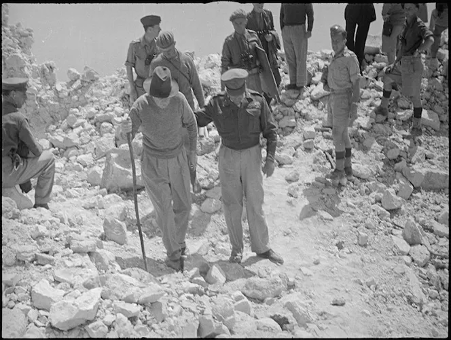
Prime Minister Peter Fraser and General Bernard Freyberg at Monte Casino May 1944. During the 2nd World War the government drew a firm line in the sand: New Zealand forces must fight as a distinct national unit, led by New Zealand commanders, with Wellington retaining the ultimate political veto over where and how they were deployed. (National Library)
The Vision 2035 framework risks dismantling the historic precedent. Australia’s strategic outlook has shifted dramatically toward a high-end, hard-power deterrence posture, explicitly anchored in the controversial AUKUS alliance and an intimate integration with increasingly unpredictable United States global strategy.
Canberra is preparing for potential US led state-on-state conflict in the northern Asia-Pacific. New Zealand, by contrast, has traditionally prioritized a focus on Pacific resilience, humanitarian assistance, disaster relief, and maritime peacekeeping. Our interests are deeply local, focused on the diplomatic stability of our immediate Blue Pacific neighbourhood.
“If our young service members are to be put in harm's way, accountability must rest with the government in Wellington.”
If New Zealand forces become structurally interchangeable with Australia’s, our operational independence evaporates. If a crisis erupted in the South China Sea or the Taiwan Strait, and integrated ANZAC task forces were activated under Australian operational command, New Zealand could find itself pulled into a conflict by default with our largest trading partner.
Sorting out "interchangeable" units in the heat of a fast-moving crisis is logistically impossible. If our crews are embedded on Australian warships or our sub-units are hardwired into Australian brigades or air mobility groups, our political leaders will face a fait accompli. The choice to join a war will have been made years prior by Australian defence planners, leaving our Cabinet with nothing but a rubber stamp.
Crucially, this threat is compounded by a dangerous geopolitical alignment by proxy: by tying our military to Australia’s through interchangeability, we inadvertently tether New Zealand to the increasingly volatile and erratic global military ambitions of the United States.
Canberra is not developing its hard-power capabilities in a vacuum. Through initiatives like the AUKUS agreement, Australia is actively pursuing its own deep structural interchangeability with the US military, essentially functioning as a southern hemisphere launchpad for Washington’s global strategy. When New Zealand plugs seamlessly into Australian command structures, we are ultimately plugging into an American military apparatus over which we have absolutely zero democratic oversight.
This multi-tiered integration strips Wellington of its ability to insulate itself from high-risk, far-flung US military adventures. History has shown that Washington's strategic priorities can shift violently with changing political tides, leading to unilateral interventions and destabilising entanglements.
As the Australian Defence Force becomes structurally inseparable from the US military, and the NZDF becomes interchangeable with Australia, New Zealand's independent foreign policy becomes a fiction. We will have outsourced our young service members to a chain of command that terminates not in Wellington, or even Canberra, but in the Pentagon.
Furthermore, this erosion of sovereignty damages our unique diplomatic currency. New Zealand’s value to the world - and to the Pacific - lies in our status as an independent, fair-minded actor. We are viewed as a nation that weighs international law, human rights, and regional consensus before acting.
If the global community perceives the NZDF as merely a subsidiary of the Australian Defence Force, our independent voice is silenced. We will be viewed through the same lens as our larger, more hawkish neighbour, foreclosing our ability to act as a diplomatic bridge or a trusted, neutral mediator in regional disputes.
We must not confuse solidarity with subordination. Australia is our closest ally, our neighbour, and our security partner. We should maintain close cooperation so we can stand shoulder-to-shoulder in times of genuine mutual crisis, including when responding to regional natural disasters. But interoperability allows us to choose when to plug in; interchangeability welds the plugs together permanently.
As we navigate an increasingly turbulent century, our leaders must remember the lessons of Peter Fraser, Bernard Freyberg and the generation that forged our independent identity.
The Vision 2035 agreements need to be scrapped. New Zealand must retain its own integrity, its own capabilities, and its own distinct voice. If our young service members are to be put in harm's way, accountability must rest with the government in Wellington.
Our sovereignty is too hard-won to be quietly integrated away in the pursuit of administrative convenience.
Kevin Hackwell
Spokesperson
Just Defence
Published by Stuff newspapers in November 2026